


Physician W. Lee Bruner, MD,LLC baton rouge, Louisiana, United States
Disclosure(s):
Brenton Reid Stucki, BS: No relevant relationships to disclose.
W. Lee Bruner, MD, III: No relevant relationships to disclose.
Introduction: This scoping review aims to map the existing literature on cochlear implantation (CI) in patients diagnosed with osteogenesis imperfecta (OI), focusing on clinical characteristics, surgical feasibility, and audiologic outcomes.
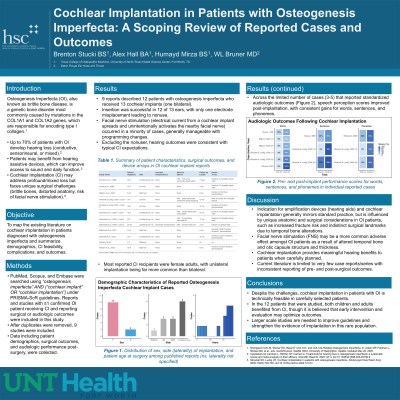
Methods: PubMed and SCOPUS databases were systematically searched in compliance with Preferred Reporting Items for Systematic Reviews and Meta-Analyses (PRISMA) guidelines for scoping reviews, in October 2024. The performed search incorporated the words "osteogenesis imperfecta" and "cochlear implantation." All the published reports that described cochlear implantation in patients with osteogenesis imperfecta were considered for inclusion. Following duplicate removal, 8 articles underwent full-text review. Data that was collected from these studies included patient demographics, surgical outcomes, and audiologic performance.
Results: A review of the identified 11 documented cases of cochlear implantation in patients with osteogenesis imperfecta is presented. Ages at the time of cochlear implantation range from 2 to 54 years, with a mean age of 30 years. The cohort comprised 10 females and 1 male. In these selected patients with OI, cochlear implantation was technically feasible, and their surgical outcomes along with audiologic performance were found comparable with CI recipients who had sensorineural hearing loss owing to other causes. No intraoperative or significant postoperative surgical complications were documented, but over three cases resulted in nonauditory stimulation of the cochlear implant.
Conclusions: Cochlear implantation is a feasible intervention for patients with osteogenesis imperfecta presenting with sensorineural hearing loss. The overall prognosis of cochlear implantation in patients with OI are promising, but the occurrence of complications such as non-auditory stimulation raises the possibility of challenges in this unique population. Further studies would help establish standardized approaches to treatment and optimize the patient selection criteria to minimize complications.