


Physician W. Lee Bruner, MD,LLC baton rouge, Louisiana, United States
Disclosure(s):
Brenton Reid Stucki, BS: No relevant relationships to disclose.
W. Lee Bruner, MD, III: No relevant relationships to disclose.
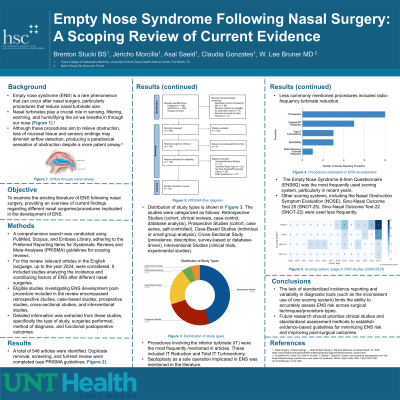
Introduction: This scoping review examines the existing literature on the incidence of Empty Nose Syndrome (ENS) following nasal surgery. The goal of this review is to explore the available evidence in order to highlight knowledge gaps and provide an overview of current findings regarding different nasal surgeries implicated in the development of ENS.
Methods: A comprehensive search was conducted using PubMed, Scopus, and Embase Library, adhering to the Preferred Reporting Items for Systematic Reviews and Meta-Analyses (PRISMA) guidelines for scoping reviews. For this review, relevant articles in the English language, up to the year 2024, were considered. It included studies analyzing the incidence and contributing factors of ENS after different nasal surgeries. Eligible studies investigating ENS development post-surgery included in the review encompassed cohort, case-control, cross-sectional studies, as well as case reports, case series, and clinical trials. Detailed information was extracted from these studies, specifically the type of study, surgeries performed, method of diagnosis, and functional postoperative outcomes.
Results: A total of 548 articles were identified. After duplicate removal, screening, and full-text review, 38 articles were included for analysis. The Empty Nose Syndrome 6-Item Questionnaire (ENS6Q) was increasingly used in more recent studies, reflecting a trend toward uniform assessment of ENS. In addition, the most common surgical procedure related to ENS development was inferior turbinate reduction; other procedures such as radical turbinate resection, middle turbinate resection, and septoplasty were implicated.
Conclusions: ENS development has been associated with multiple surgical interventions. However, additional studies using the ENS6Q investigating the development of ENS post-surgery are needed to better evaluate incidence rates and provide an understanding of the impact of various nasal surgeries in the development of this condition.